- New/Used Building Materials Parts
- sku: 6927104244127682
- HE181197
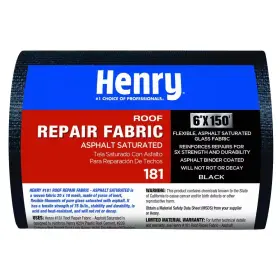
HE181197 Henry Asphalt Saturated Roofing Repair Mesh Fabric
| Brand | BRANDED |
|---|---|
| Manufacturer Part Number | HE181197 |
| Roofing Product Type | ROOFING REPAIR |
| Application Method | BRUSH ON, MOP, ROLL ON, SPRAY ON, SQUEEGEE, TROWEL |
| Material | FIBERGLASS |
| Product Width | IN |
| Roof Repair Type | REPAIR FABRIC |
| Unit Type | FT |
| Features | CORROSION RESISTANT, MILDEW RESISTANT, RUST RESISTANT |
| Color Family | BLACK |
Review BRANDED Henry 181 Asphalt Saturated Black Roofing Repair Woven Mesh Fabric In 150 Ft
Introducing the HE181197 Henry 181 Asphalt Saturated Roofing Repair Mesh Fabric, a versatile and effective solution for repairing and reinforcing various types of roofing systems. This high-quality repair mesh fabric, measuring 150 feet in length, is specifically designed to provide exceptional strength and durability to extend the life of your roof.
The Henry 181 Asphalt Saturated Roofing Repair Mesh Fabric is made from heavy-duty, asphalt-saturated material that ensures superior waterproofing capabilities. The mesh fabric is engineered with a high-tenacity polyester base, providing excellent tear strength and resistance to harsh weather conditions. The asphalt coating not only serves as a waterproof barrier but also acts as an adhesive when applied to roofing surfaces.
This repair mesh fabric features a unique, open weave design, which allows for easy application and excellent compatibility with various roofing materials such as asphalt shingles, rolled roofing, and built-up roofing systems. The open weave structure also enables the mesh to conform to irregular roof surfaces, ensuring a seamless repair and a more uniform appearance.
The Henry 181 Asphalt Saturated Roofing Repair Mesh Fabric is an ideal choice for repairing damaged areas, such as leaks, holes, or tears in roofing systems. It can also be used for reinforcement in high-traffic areas, around vent pipes, or in areas prone to severe weather conditions. By providing an additional layer of protection, this repair mesh fabric can help prevent further damage and prolong the lifespan of your roof.
The 150-foot length of the Henry 181 Asphalt Saturated Roofing Repair Mesh Fabric offers ample coverage for most residential roofing projects, making it a cost-effective and efficient solution for roof repairs. Its versatility, durability, and ease of application make it a must-have tool for roofing professionals and homeowners alike. Trust the Henry 181 Asphalt Saturated Roofing Repair Mesh Fabric to help you maintain the integrity and performance of your roof, providing you with peace of mind and long-lasting protection.
Pros and Cons of Buying Henry 181 Asphalt Saturated Roofing Repair Mesh Fabric (150 ft)
Introduction:Henry 181 Asphalt Saturated Roofing Repair Mesh Fabric is a popular choice for homeowners and professionals seeking an effective solution for repairing damaged roofs. In this analysis, we will discuss the pros and cons of purchasing this product.
Pros:1. Durability: The asphalt-saturated mesh fabric is resilient and can withstand extreme weather conditions, making it an excellent choice for long-term roof repairs.
2. Versatility: Henry 181 repair mesh can be used for various roofing applications, including patching holes, repairing leaks, and reinforcing weak areas.
3. Easy to Install: The fabric is simple to apply, requiring minimal tools and expertise. It can be installed over existing shingles, without the need for tear-off or additional adhesives.
4. Waterproof: The asphalt coating on the mesh fabric ensures that it is waterproof, providing reliable protection against rain and moisture.
5. Cost-Effective: Compared to other roof repair methods, such as complete roof replacement, using Henry 181 repair mesh is a more cost-effective solution for addressing smaller roof issues.
Cons:1. Limited Coverage: A 150-foot roll of Henry 181 repair mesh may not be sufficient for larger roof repairs. Homeowners with extensive damage should consider purchasing multiple rolls or alternative solutions.
2. Weight: The asphalt-saturated mesh fabric is heavier than non-saturated repair fabrics, which can make it more difficult to handle and transport.
3. Potential for Shrinkage: Over time, the asphalt coating on the mesh fabric may shrink, leading to potential gaps and reduced waterproofing effectiveness.
4. Environmental Impact: Asphalt saturated repair mesh contains bitumen, which is derived from petroleum, contributing to its environmental impact during production and disposal.
Conclusion:Henry 181 Asphalt Saturated Roofing Repair Mesh Fabric offers several advantages, including durability, versatility, ease of installation, waterproofing, and cost-effectiveness. However, it also comes with some disadvantages, such as limited coverage, weight, potential for shrinkage, and environmental impact. Ultimately, the decision to purchase Henry 181 repair mesh depends on the specific needs and circumstances of the homeowner or professional. For smaller roof repairs or temporary fixes, this product can be a valuable and cost-effective solution. For larger projects or those with a greater focus on longevity and sustainability, alternative roofing repair methods or materials may be more suitable.
Recommendation:I would recommend considering Henry 181 Asphalt Saturated Roofing Repair Mesh Fabric for homeowners and professionals seeking a reliable, cost-effective, and easy-to-install solution for repairing smaller roof issues. For larger projects or those with a greater focus on sustainability, alternative roofing repair methods or materials should be explored. Always ensure proper installation techniques are followed to maximize the durability and effectiveness of the repair.
Details:
Henry 181 asphalt saturated black roofing repair woven mesh fabric 6 in x 150 ft is a woven fabric, made of flexible filaments pure glass saturated with asphalt. Completely submerges between layers of roofing cement as part a 3-way patch for easy installation. It is also acid and heat resistant, won't rot or decay. Giving it stability and durability.
Leak-resistant design let's you easily repair cracks, splits, holes, seams and blisters in roof asphalt cement coatings. Great for vertical applications with a leak stopper. It has tensile strength of 75 lbs. Woven, open-mesh asphalt-saturated fiberglass material provides a durable bond.
Apply between layers of roofing cement in commercial and residential applications. The fabric is leak resistant, and helps you easily repair your roof. Use as the second step in leak repair projects.
specifications buildymat:
- brand: Branded
- mpn: He181197
- roofing product type: Roofing Repair
- application method: Brush On, Mop, Roll On, Spray On, Squeegee, Trowel
- material: Fiberglass
- product width: In
- roof repair type: Repair Fabric
- unit type: Ft
- features: Corrosion Resistant, Mildew Resistant, Rust Resistant
- color family: Black
returns buildymat:
- method: money back
- policy: returns accepted
- paid by: buyer
- time: 14 days
shipping buildymat:
- carrier: ups
- type: fixed
- transit: 3-9 days
- service: ups ground
- class: standard
offer buildymat:
- in stock #: 2
- started: july 21, 2025
- options: ship-to-home
- prices: $29.28–$34.10
- item condition: New
- sold #: 17
- availability: in stock
payments buildymat:
- other
- wallet: apple-pay
- credit card: discover
seller buildymat:
- city: bay shore, new york
- rating: 100.0%
- # reviews: 35
general buildymat:
- category: Business & Industrial > Supplies > Building Materials
Similar Items:
- Branded 445033773744 Tile Repair Kit And Granite Quartz Countertop Chip Color Match Marble Hard as porcelain after curing, the ceramic tile repair kit is waterproof and hard. If part a and b are completely mixed at a ratio of 1:1, the marble repair paste kit will become very solid hard after 12 hours. Multi functional ceramic repair kit - the tile and tubs is not only suitable for ...(November 10th, 2024)
- Branded 744110348286 20 Lb Fast Set Repair Mortar Mix New With dimensions of 10.5 inches in height and 9.4 length depth, this gray-colored mortar mix is suitable for floor use offers reliability with manufacturer warranty information available on the packaging. It has a rapid-setting mortar mix type with compression strength of 6000 psi, making it ...(December 28th, 2024)
- Branded 705353990168 48 Inch W X 150 Ft L Non-adhesive Eifs Stucco Mesh L non-adhesive ifs stucco mesh...(February 24th, 2025)
- Branded Em-38150 Eifs Stucco Fiberglass Mesh Net Roll Non-adhesive 38 Inch X 150 Ft Concrete Tool Ifs stucco fiberglass mesh net roll non-adhesive 38 in. Concrete tool. The self-adhesive option allows for quick and secure installation, while the non-adhesive version provides flexibility larger wall applications. Flexible yet durable fiberglass material for long-term performance. Weather-...(November 8th, 2025)
- Branded Wae-kanayu-2594 1.5 Ft Rv Generator Adapter Extension Cord Yellow Gray Black Heavy-duty 10AWG Ste cable: constructed with thick 10-GAUGE copper wires and a flame-retardant, weather-resistant; handles up to 30A 3750W at 125V safely, delivering stable power even in outdoor or job environments. Connecting and disconnecting devices is easy...(December 28th, 2025)
- Branded Ac117s Heavy Duty Tailgate Net For Truck Bed With Detachable Cargo Mesh Ne Durability security: built with heavy-duty 2 nylon webbing and reinforced cross-webbing extra stitching, this tailgate net ensures maximum strength longevity. Protection for every load: whether you're hauling bulky cargo or smaller items, our tailgate net has you covered. Flexible securing system: ...(February 22nd, 2026)
- Branded Boards Bbc8s050 50 Pack And 100 Bulk Heavy Duty Carabiner Snap Clip Hooks Black Zi Heavy duty carbine snap hooks with spring gate action for making quick attachments. Corrosion resistant steel carbine clips. 50 pack and 100 bulk heavy duty carbine snap clip hooks black, zinc stainless contractors, gyms, fitness centers, business, industrial: size: 50, style: 8CM, 3.15IN, stainless...(March 23rd, 2026)
- Branded 726084389595 Jb Weld Fiberglass Filler Short Strand 1 Quart Repair Putty Waterproof Durable Dries in 30 minutes. It provides waterproof, durable repairs to cracks up inch on fiberglass, composites, metal, and concrete. Provides short-strand reinforced repairs on fiberglass, composites, metal concrete. Sand able and printable. Easy to sand, printable waterproof. 2x the strength of body ...(April 1st, 2026)
